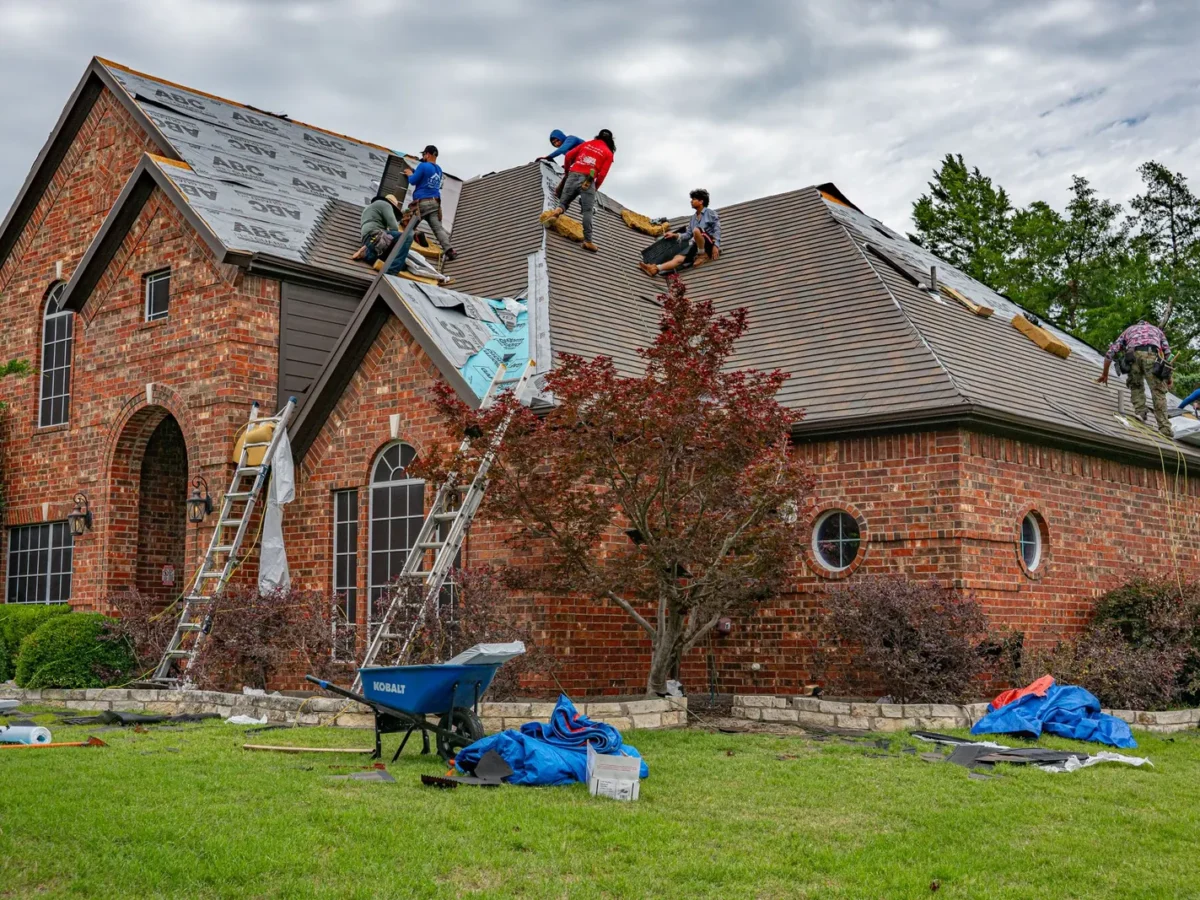
The hail stops, the sun comes out and within an hour every homeowner on the street is wondering about their roof. By the next morning, out-of-town trucks are knocking on doors, yard signs are going up and the search results are full of companies nobody has heard of. Homeowners know some of those crews won’t be around next year, and they’re nervous about who to trust.
That nervousness is your opportunity. Roofing marketing after a hailstorm isn’t about shouting louder than the storm chasers. It’s about being the obvious local, trustworthy choice at the exact moment homeowners start looking, and most of that work has to happen before the storm arrives.
What homeowners search after a hailstorm
Storm searches come in waves. In the first hours, people search “hail damage roof”, “roof inspection after hail” and “roofers near me”. Over the following days and weeks, they search “does insurance cover hail damage”, “how to choose a roofer” and “roof replacement cost”.
The first wave is decided mostly on the map, by the companies with strong reviews, accurate hours and a phone that gets answered. The second wave is decided by websites that answer insurance and process questions clearly.
Both waves produce storm damage roofing leads, but they reward different preparation. You need to be ready for both.
Why most roofers lose the storm before it happens
The roofing companies that win after a storm usually did the work months earlier. Their Google profiles were complete, their review counts were strong and their storm and insurance pages were already ranking when the hail fell.
Companies that wait until after the storm to fix their marketing are competing with hundreds of others for the same attention, at the same time, often with weaker profiles. New pages published the day after a storm rarely rank in time to matter.
So the most valuable roofing marketing after a hailstorm is the marketing you did in the fall and winter before it.
Step 1: Make your Google Business Profile storm-ready
Your roofer Google Business Profile is where most first-wave calls are won. Before storm season, check that:
- Your primary category is “Roofing contractor”, with secondary categories for the services you offer.
- Every service is listed, including storm damage repair, roof inspection and insurance claim help.
- Your hours are accurate, and if you take calls after hours during storms, the profile says so.
- You have recent, real photos of your crews, trucks and finished roofs on local homes.
- Your address is real. Google’s guidelines for representing your business don’t allow virtual offices, and roofing is a category where fake listings get reported.
A complete, active profile tells homeowners you’re a real local business, which is exactly what they’re worried about.
Step 2: Build reviews before you need them
After a storm, homeowners compare reviews closely, looking for proof that a roofer is local, honest about insurance and still answers the phone after the job.
Reviews take time to build. The roofers who look strongest after a storm asked every customer for a review all year, usually once the job was finished and the insurance side was settled. That’s when homeowners are happiest and most willing to describe the work.
A profile with steady reviews mentioning specific neighborhoods and real jobs beats a profile with a burst of vague five-star ratings.
Step 3: Publish storm and insurance pages early
Homeowners have the same questions after every storm. How do I know if hail damaged my roof? Will insurance pay?
What does the adjuster look for? How long will this take?
A roof inspection after hail page, an insurance claims page and a replacement page that answer those questions honestly will keep bringing in leads for years. They need to be live and ranking before the season starts, which usually means publishing in the fall.
Each page should explain the process in plain English, show real photos of hail damage and repairs, and make it easy to request an inspection.
Not sure whether your profile and pages are ready for the next storm? Request a free audit and we’ll show you where you stand.
Step 4: Be clear about the deductible rule
Texas law is direct about one thing storm chasers often ignore. Under Texas Business and Commerce Code chapter 27, a contractor can’t waive, rebate or absorb a homeowner’s insurance deductible.
Saying this plainly on your website and in conversations builds trust. It tells homeowners you follow the rules and warns them, without naming anyone, about the companies that offer to “cover the deductible”.
How to stand apart from storm chasers
Homeowners are looking for signs of a real, local business. Make those signs easy to find:
- A local address and history. How long you’ve been in the area, shown on your profile and website.
- Real crew photos. Your own team and trucks, not stock images.
- Local reviews. Reviews that mention neighborhoods and streets homeowners recognize.
- Credentials. Texas has no state roofing license, but many roofers hold voluntary licensing through RCAT and manufacturer certifications. If you have them, show them.
- Warranty details. What happens if something goes wrong next year, and who homeowners should call.
Storm chasers struggle to show any of these. You can show all of them.
What not to do
Some tactics feel effective in the rush and cost you later. Avoid creating extra Google listings in towns where you don’t have an office, stuffing city names into your business name or buying reviews. All of them break Google’s guidelines, and suspensions often happen right when you need the profile most.
Be careful with door-knocking and yard signs too. They can work, but many cities have rules about solicitation and signs, and aggressive tactics make you look like the companies homeowners are trying to avoid.
Handling the surge in calls
A storm can bring more calls in a week than you normally get in a month. If the phone goes to voicemail, those leads go to someone else.
Plan for it. Use an answering service or extra office help during storm weeks, set up a simple inspection request form on your website and respond to every inquiry the same day, even if the inspection is a week away.
Track where every lead comes from. After the storm, you’ll know which channels, pages and searches brought in signed jobs, which tells you where to put effort before the next one.
Use your website as a storm-week hub
During storm weeks, your website can answer the same questions your office staff hear fifty times a day. A short banner on the home page linking to your hail damage page, a simple inspection request form and clear next steps take pressure off the phones.
Keep the message calm and specific. “We’re scheduling free roof inspections across Plano and Allen this week” reads better than “STORM SPECIALS NOW”.
Helping homeowners through the insurance process
Most homeowners have never filed a roof claim. They don’t know when to call their insurer, what an adjuster looks for or what happens if the estimate seems low.
A plain-English guide to the claim process, written from the homeowner’s side, is one of the most useful pages a roofer can publish. Explain what you do and don’t do, and suggest homeowners check their own policy and talk to their insurer about specifics.
After the storm: keep the momentum
Once the rush slows, the work isn’t finished. Ask every storm customer for a review once the job and claim are complete.
Add photos of finished roofs to your profile. Update your storm pages with anything new you learned about local insurance practices.
Those steps make your company look stronger when the next storm hits, and in much of Texas, there’s always a next storm.
Frequently asked questions about roofing marketing after a hailstorm
When should roofers start preparing for storm season?
In the fall and winter before. Profiles, reviews and storm pages need weeks to months to build, and they need to be ranking when the hail falls.
Can a roofer offer to pay the homeowner’s deductible in Texas?
No. Texas law prohibits contractors from waiving, rebating or absorbing an insurance deductible. Explaining this on your site builds trust.
Should roofers create Google listings in every town they serve?
No. Google only allows listings for real locations. Use service areas instead, and earn reviews and photos from jobs in each town.
How do I get reviews from storm customers?
Ask once the roof is finished and the insurance side is settled, with a direct link sent by text or email. That’s when homeowners are most satisfied.
Do storm damage pages really bring in leads?
Yes, when they’re published early and answer real questions about damage, insurance and the process. They often keep producing leads for years.
Get ready before the next storm
The best time to prepare for storm season is before the forecast turns. Ask for a free audit and we’ll check your profile, reviews and storm pages against the roofers who outrank you. Learn more about roofer marketing, local SEO and Dallas roofer SEO.